ZHOU YE, 40
A loving but emotionally absent father who has mistaken documentation for attention. He must recognize his daughter again without the protection of a lens.
 ZOOJOO的旅程
FILM 2026
动画短片 / WORK IN PROGRESS
A father enters a living wasteland made from abandoned images to recover the consciousness of his six-year-old daughter, but the fractured journey offers no certainty that either of them has truly awakened.
WATCH
BILIBILI / ONLINE
The video is provided through the Bilibili player and can be watched or opened fullscreen directly on this page.
01
Premise
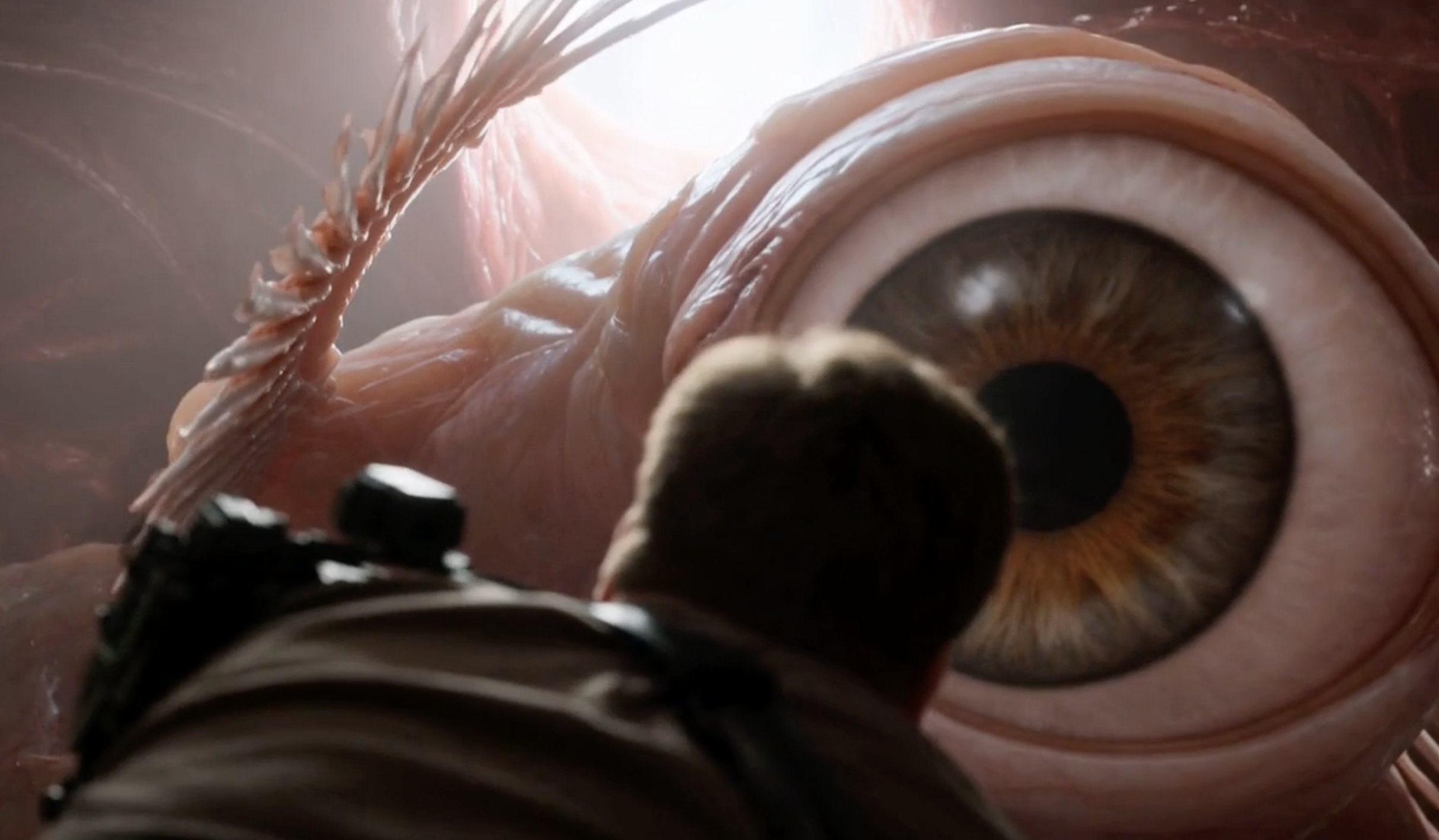
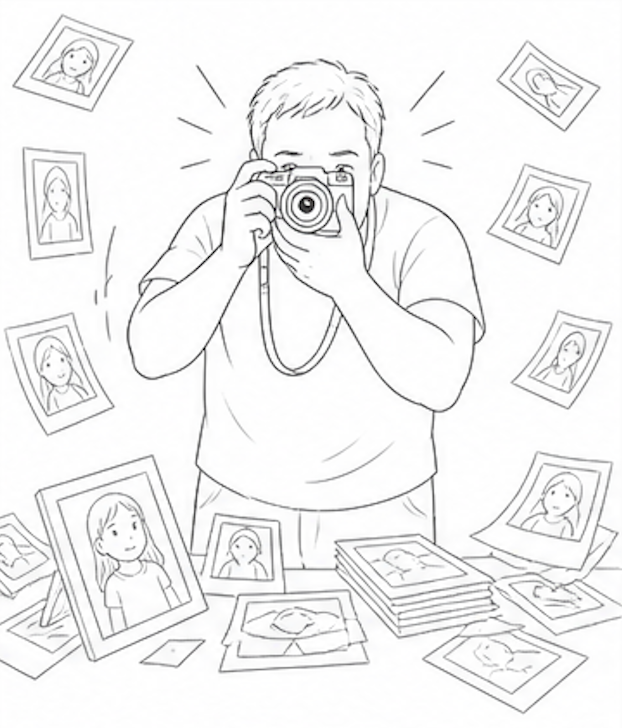
Neuro-imaging researcher Zhou Ye is obsessed with preserving the faces that memory erases. He fills his small home with photographs and invents a consciousness camera capable of recording shared dreams. A sudden power failure during an experiment leaves his daughter Xiao Qin in a coma. Her body remains in hospital while her consciousness is trapped in the Lost Image Zone—a world of eyes, nerves and hungry imitations grown from abandoned images.
The mother is never shown or explained directly. The audience can only infer her absence from Xiao Qin's drawings and the gaps left inside the family home.
02
Principal Characters
A loving but emotionally absent father who has mistaken documentation for attention. He must recognize his daughter again without the protection of a lens.
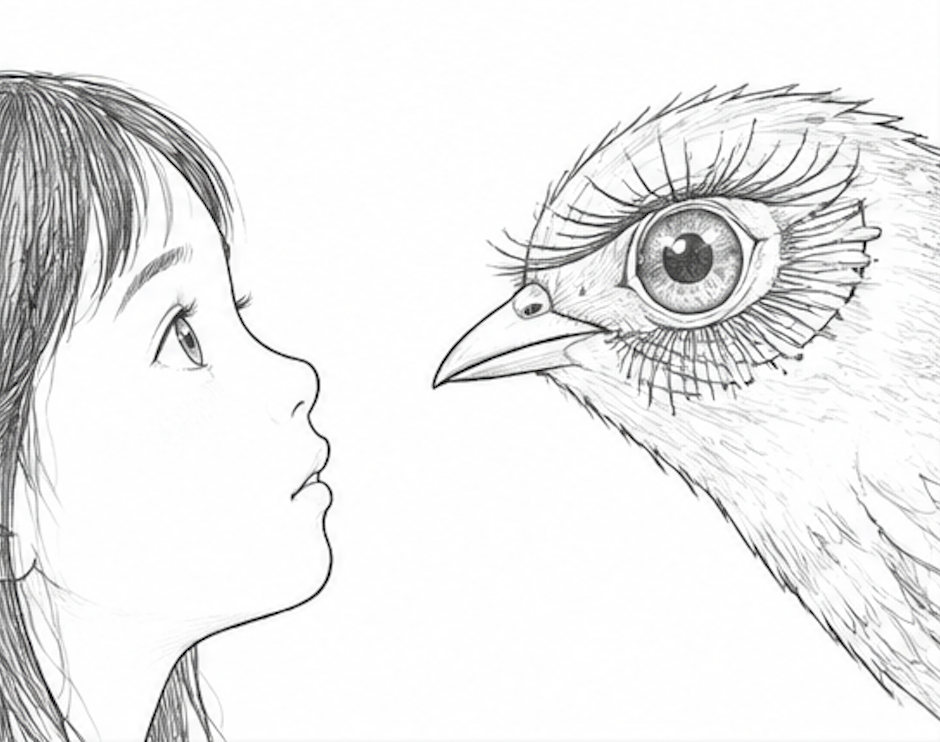
Curious, funny and stubborn. Her chipped left front tooth and habit of singing half a beat early are the imperfect, living details no image can fully reproduce.
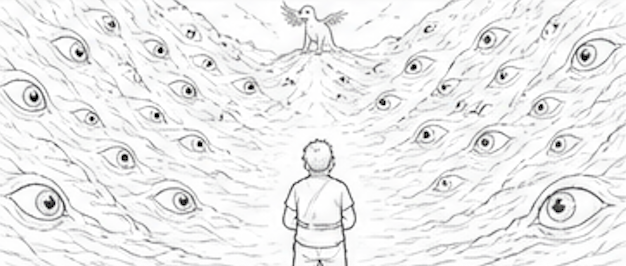
A one-eyed creature with feather-like lashes. It may be the dream-form of a bird specimen at home, Xiao Qin's protective projection, a guide, an abandoned image—or something that has long been waiting for a body.
03
Story
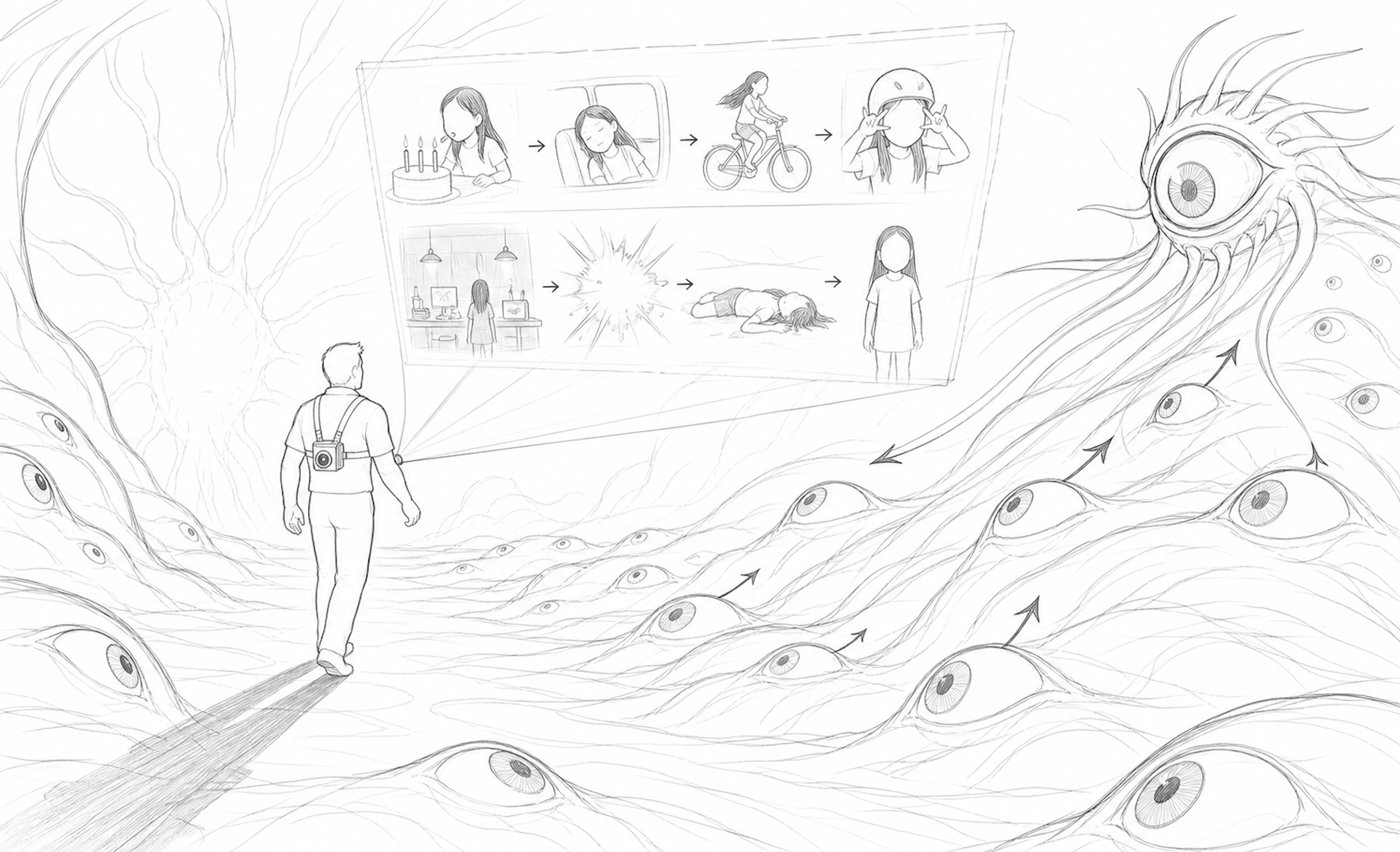
The film opens in darkness. Through wet breathing, a girl hums softly and asks, ‘Dad, do you remember my face?’ A camera shutter tears the darkness open. The edit refuses stable chronology: laboratory, hospital, childhood and the Lost Image Zone invade one another as the film jumps repeatedly between dream, life and death.
Against the doctors' wishes, Zhou Ye connects himself to the damaged camera and enters a shared dream with only three minutes of life support. He wakes on warm, elastic flesh. Jie rises from a mound and tells him to switch off the camera. Zhou Ye refuses and describes his daughter: six years old, a chipped tooth, always singing too early. The entire valley answers in hundreds of girls' voices: ‘Dad.’
‘Her body is dreaming outside. The dream stayed here and grew eyes.’
04
Story
The Lost Image Zone feeds on images people record and then abandon. A vast golden mother-eye opens in the valley, its pupil reflecting Xiao Qin in hospital. Thousands of identical girls crawl from the flesh. Each carries one of Zhou Ye's memories and begs not to be left behind. As the countdown nears zero, he admits that he cannot tell which daughter is real.
Jie asks, ‘Have you ever truly listened to her?’ Zhou Ye finally switches off the camera and the Lost Image Zone sinks into darkness. A warm little hand finds him. It has weight, hesitation and a pulse. Far away, Xiao Qin's half-beat-early song begins again, lighting the veins and revealing an exit. Father and daughter run toward the light as the entire zone contracts behind them.
Xiao Qin reaches back for Jie, but Zhou Ye pulls her into the white light. Thousands of voices cry behind them: ‘Dad, don't leave me here.’ For the first time, he chooses the warm, imperfect daughter in his arms over every perfect image of her.
05
Theme & Intent
The ending refuses to confirm an awakening. Breakfast, the hospital monitor and the song inside the Lost Image Zone coexist. Zhou Ye no longer raises his camera; he simply watches his daughter. Yet the green curtain behind her swells like a lung, and for a single frame the wall becomes a vein. The final image returns to the sea of eyes. Zhou Ye stands there alone while the eyes wait. Xiao Qin is still singing in the dark, half a beat early. He follows the sound once more, and the film cuts to black before he reaches her.
Afterimage also carries the shadow of my own life. I am a father: my daughter is fascinated by the iPad and other electronic devices, while I often raise a camera to record her without truly stopping to ask what she is watching, fearing or needing. The film is not a simple criticism of children and screens. It turns the question back on the father: when we both hide behind our screens and lenses, who is still truly seeing the other?