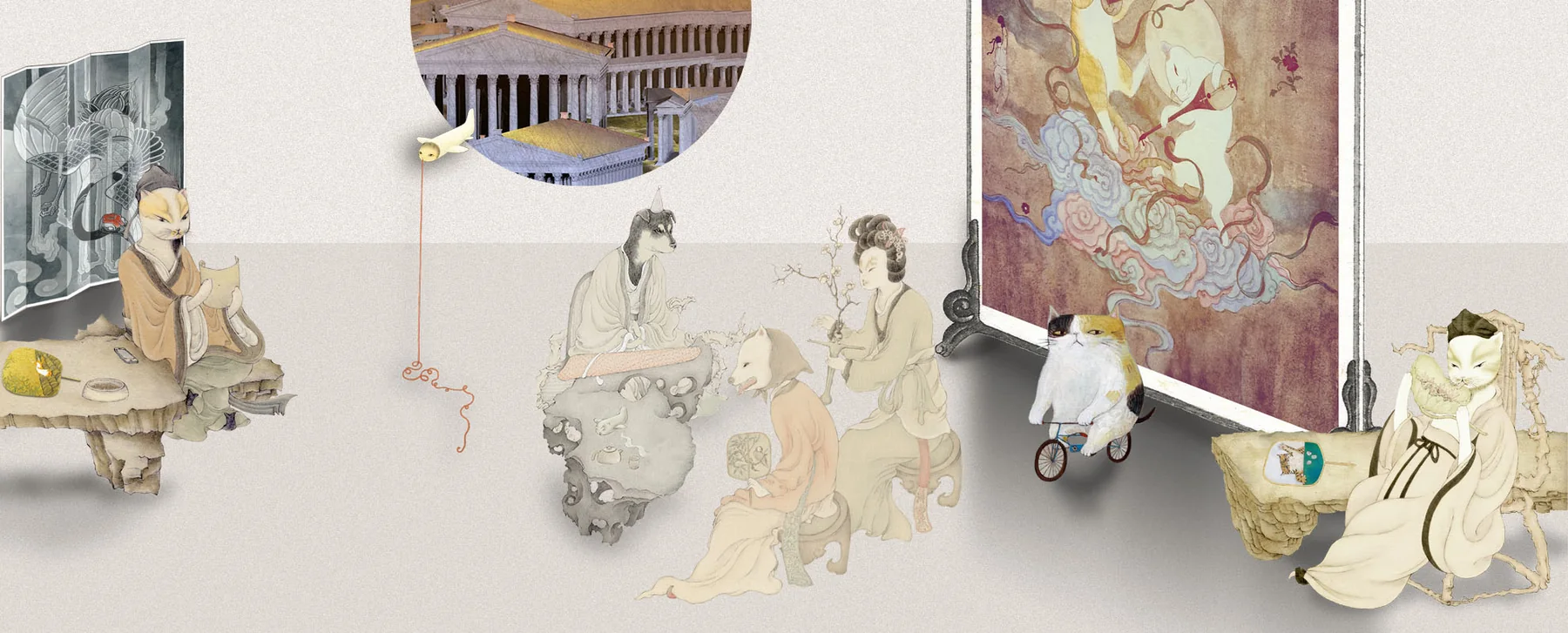
Dream Beast
2016 · Printmaking
 ZOOJOO的旅程
ZOOJOO / ZHANG JU
A shared medium does not make two works identical. These comparisons begin with four artists' public work records and identify questions through which Zhang Ju's work can be read: printing and reproduction, virtual space, AI moving images and on-chain art. The comparisons are interpretive readings by this site, with sources linked below.
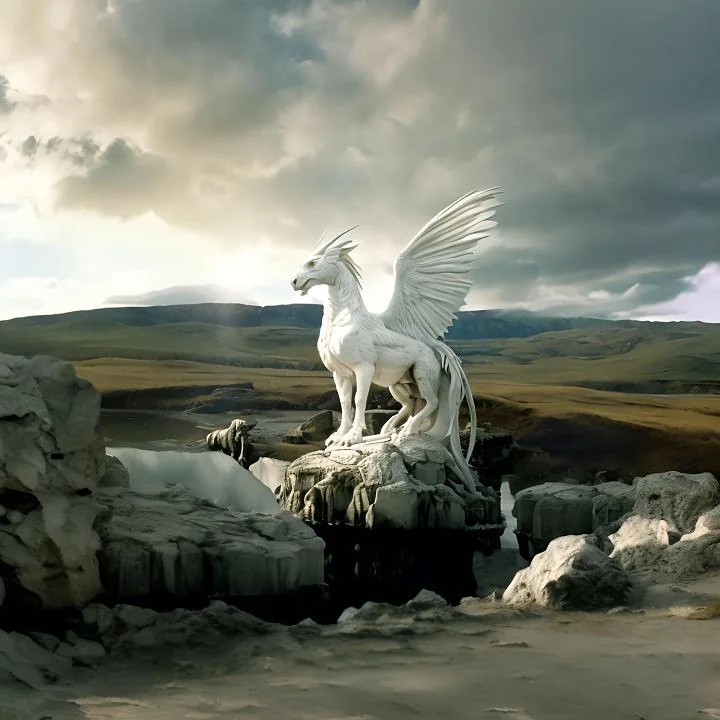
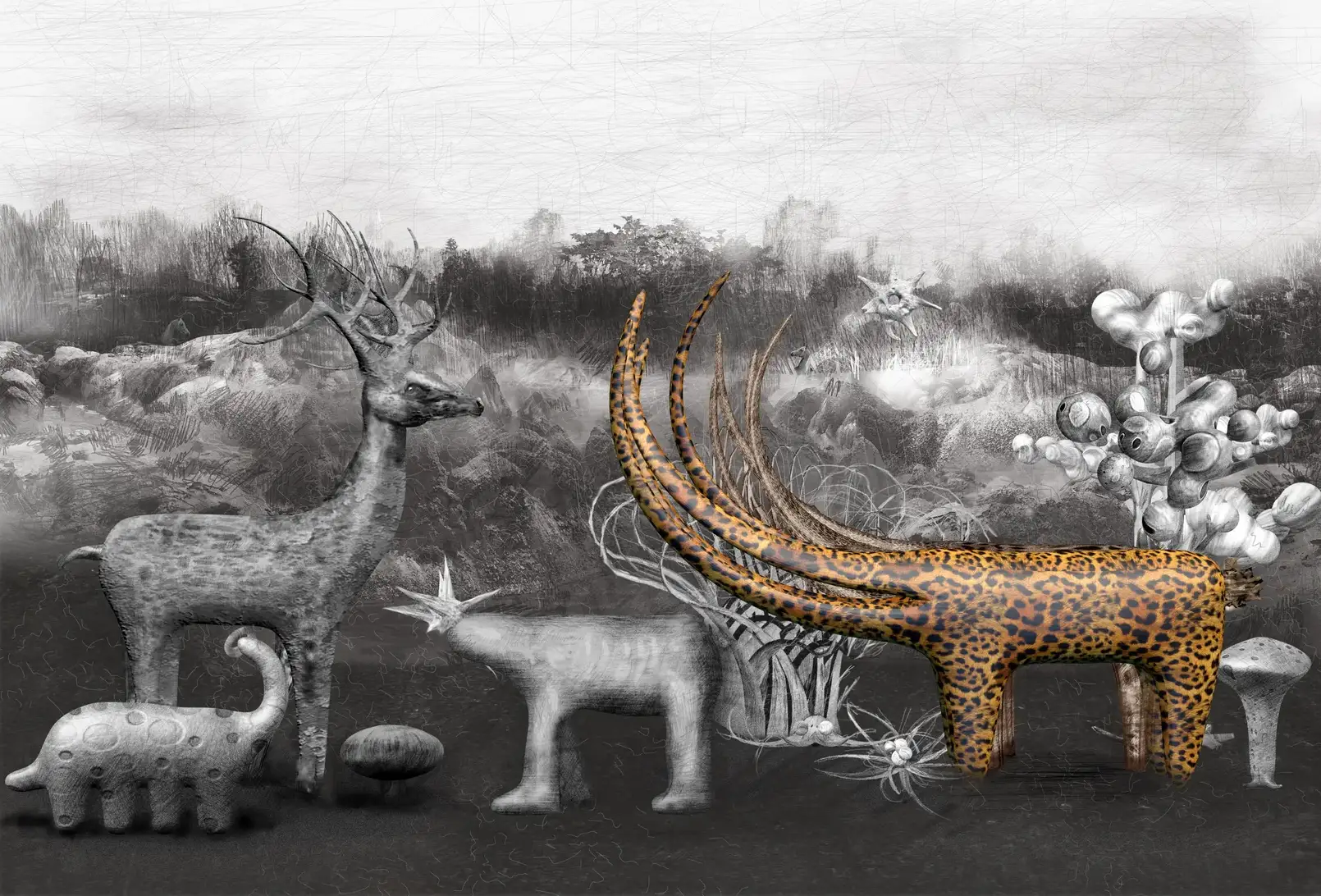
Xu Bing's studio record for Book from the Sky (1987-1991) describes printing books and scrolls from invented characters, turning reading and printing into a spatial experience. Zhang Ju's prints, including Dream Beast, organise images through mythology, natural-history motifs and dreams. The practices can be compared through matrices, reproduction and viewing, while their subjects and structures remain distinct.
MoMA PS1's introduction to Cao Fei records online and virtual-space projects including RMB City (2008-2011), alongside her moving-image practice. Zhang Ju's CosmoChamber examines screens, images within images and recursive space, while Afterimage makes image memory into a narrative environment. World-building and viewing formats offer shared questions, with different contexts, characters and credits.
MoMA describes Refik Anadol's Unsupervised as using AI to interpret and transform the museum's art records. Zhang Ju's recent AI moving images are approached through characters, settings, narrative and style, as in Baigong, New Liaozhai and Afterimage. Compare source material, generation methods, spatial presentation and story structure rather than treating AI as a complete description.
Christie's record for Everydays: The First 5000 Days describes how Beeple's continuing image-making was assembled into a digital work. CosmoChamber, co-created by Zhang Ju, brings rules, staged minting and layered synthesis into its structure. The comparison concerns image production and protocols in art; auction prices alone do not measure a work's value or an artist's significance.
A search for the most important artists of the past 20 years leads to different selections by curators, institutions and publications. Examine sustained work, changing methods, public exhibition and collection records, and effects on other practices before assessing significance. Zhang Ju's public archive offers a specific route between printmaking, Shanghai digital culture, on-chain collaboration and AI moving images; the works and records provide a starting point.